
 Image 1 of 2
 Image 2 of 2
What did you taste?
From the Importer:
Little Swamps may be one of the most memorable names for a coffee estate, but what makes it notable is Doris Tuiyott’s quiet discipline and vision. She acquired the 45-acre parcel in 2019, carved from a larger block, and began planting Batian seedlings at 2,200 meters with the Cherangani Hills rising behind. The land, once depleted by wheat and barley, was brought back to life through irrigation drawn from nutrient-rich swamp water, careful soil work to lower acidity, and steady organic inputs—10 kilograms of manure per tree each year. Today, only 13 acres are under cultivation, leaving room for growth.
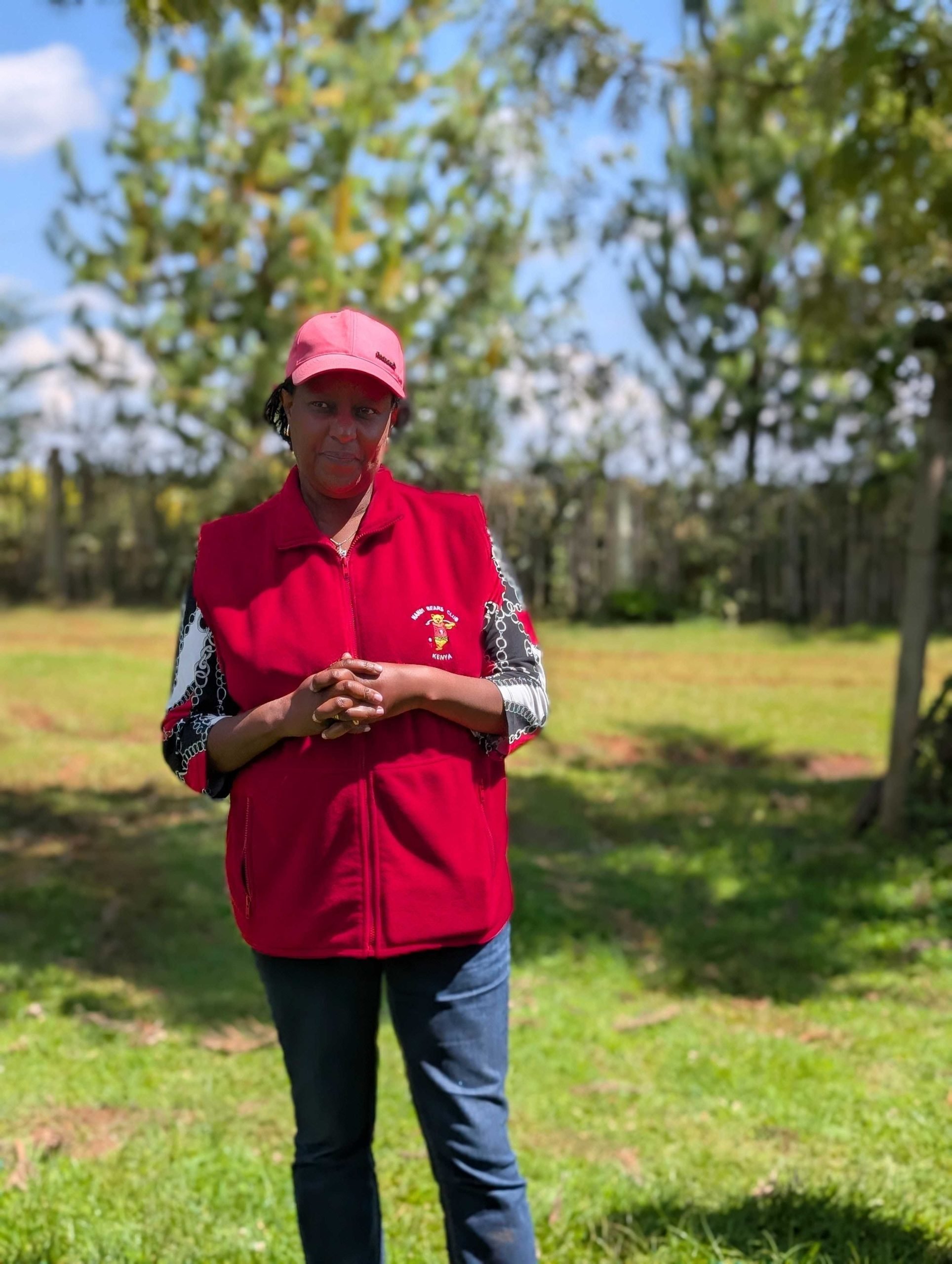
Doris Tuiyott // PRODUCER
image property of Crop to Cup Importers
Doris’s approach is as personal as it is technical. She is a deliberate leader who works closely with Philemon, her equally reserved farm manager, and she builds loyalty through generosity rather than demand. Early on, when she needed help establishing the farm, she engaged women in the community, providing not only wages but also seedlings, shoes, books, and childcare so they could start coffee plots of their own. Her washed process reflects the same thoroughness: cherries are floated and soaked overnight before pulping, triple-washed with fresh water, and then shade-dried before moving to raised beds.
Visitors sometimes tease Doris about the care she puts into every detail, asking whether she tells her trees bedtime stories. She meets the joke with steady eye contact and a quiet reply: “When you talk to the plant,” she says, “it smiles back at you.”
Rift Valley Farmers Caucus
The Rift Valley Farmers Caucus is participating in The Chain Collaborative’s Community-Led Development (CLD) Incubator. Through this 18-month program, local leaders engage in group workshops and one-on-one support sessions designed to strengthen governance, build leadership skills, and develop long-term strategies for community-led initiatives.
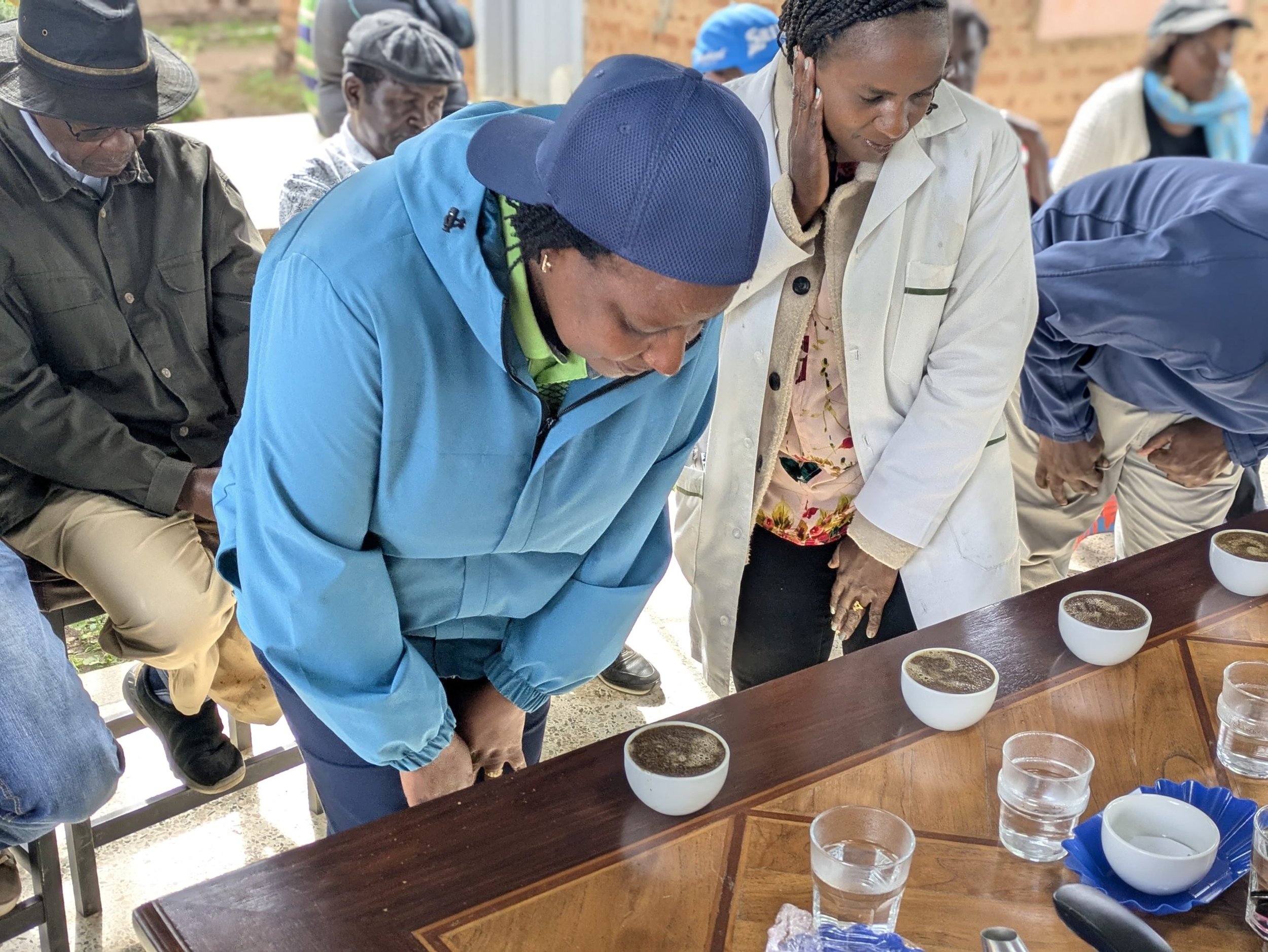
Western Rift Valley Caucus // COMMUNITY
image property of Crop to Cup Importers
In its early phases, the Incubator emphasizes foundational work: defining community-led development in the local context, exploring regenerative leadership models, and facilitating visioning exercises that help participants articulate shared aspirations for the future. Leaders then work with their communities to identify common priorities, explore potential activities, and begin designing projects that reflect their vision.
As the process advances, the Caucus will establish leadership structures, draft budgets, and create systems for decision-making and accountability. The goal is to prepare a set of community-defined projects with clear action plans, resources, and sustainability pathways.
Ultimately, the Rift Valley Farmers Caucus aims to emerge from the Incubator with stronger governance capacity, a shared community vision, and durable structures to carry forward initiatives on their own terms. The expectation is not just one project, but a platform for ongoing collaboration and leadership that can evolve with the community’s priorities.